

Fascia, Feelings & Feminine Release
Your Body Might Be Holding More Than You Think...
There’s a growing conversation happening around the body, not just about fitness or beauty, but about what our bodies may actually remember.
As women, especially as we move through motherhood, heartbreak, stress, divorce, menopause, grief, career pressure, and the sheer emotional labor of modern life, many of us carry tension that doesn’t simply disappear because we “moved on.” Sometimes, the body keeps score.
In the world of somatics, the practice of tuning into the wisdom of the body, there is a strong belief that fascia tissue can hold emotional tension, stress patterns, and suppressed emotions. Fascia is the connective tissue that wraps around our muscles, organs, and nervous system. When healthy, it’s fluid, supple, and elastic. But when we live in prolonged stress or emotional suppression, fascia can become tight, sticky, restricted, and painful.
For women, one of the most emotionally charged areas of the body is often the pelvis.
- The hips.
- The groin.
- The lower back.
- The glutes.
- The pelvic floor.
These are deeply feminine spaces in the body, areas associated with sexuality, creativity, safety, pleasure, childbirth, intimacy, shame, and emotional holding.
As a somatic intimacy coach, I’ve become fascinated by the idea that healing doesn’t always begin in the mind. Sometimes it begins in the body.
The Pelvic Floor: Our Emotional Storage Unit?
Many body-based practitioners believe that the pelvic bowl can become a storage center for unprocessed emotion.
Think about how often women instinctively tighten their lower body during stress:
- clenching the jaw
- tightening the stomach
- squeezing the thighs
- holding the breath
- contracting the pelvic floor without even realizing it
Over time, these protective patterns can become chronic. We become disconnected from softness, sensation, and release.
This is why restorative somatic practices can feel so profound. They invite the body to exhale.
- Not through force.
- Not through performance.
But through gentle awareness and touch.
Enter the Gua Sha
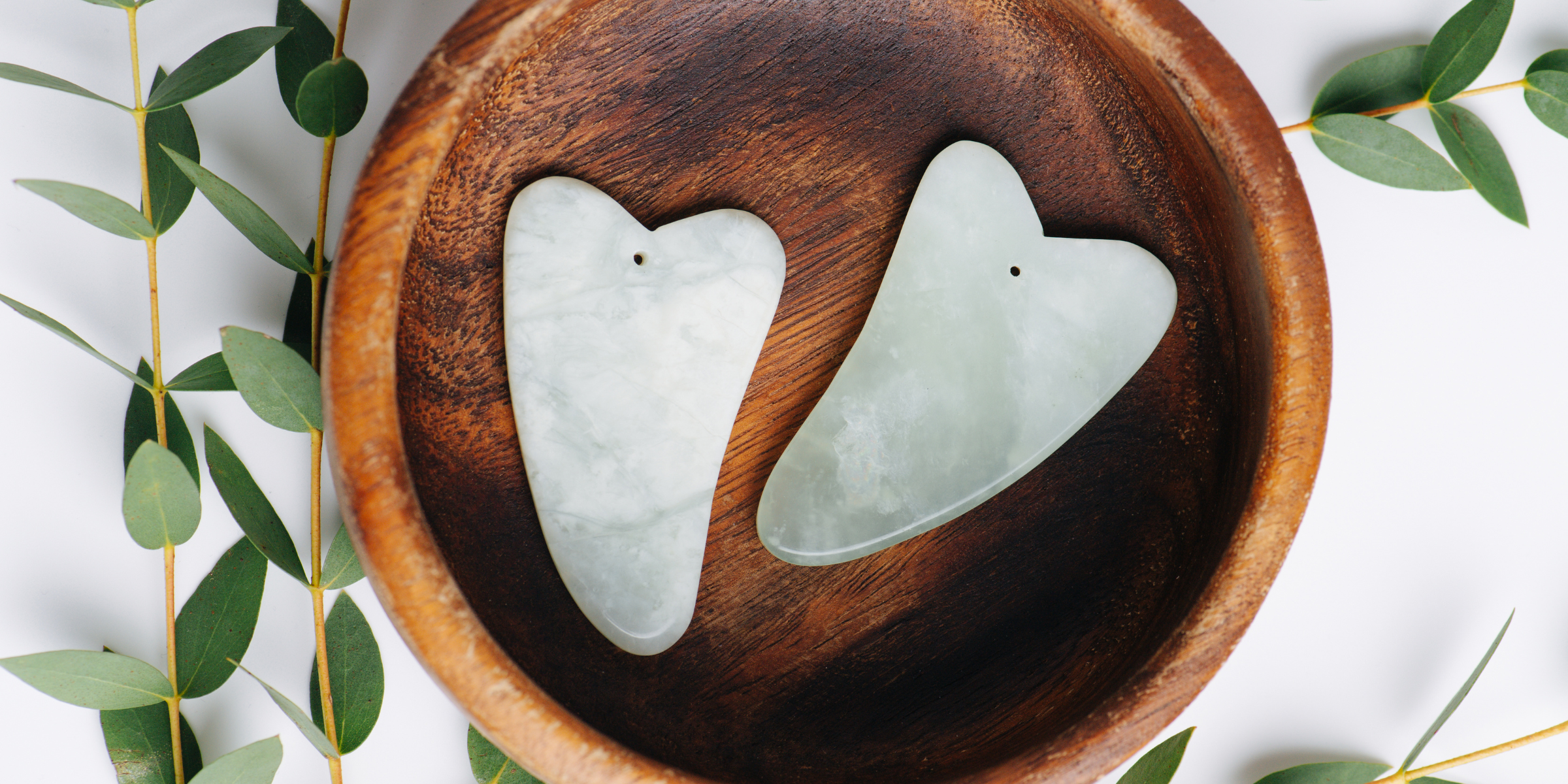
Traditionally, a Gua Sha tool is known as a facial massage tool used to sculpt, lift, and stimulate circulation in the skin. But many people are now exploring its use beyond the face, especially across the hips, thighs, glutes, groin creases, and lower back.
And no, this is not about internal massage.
This is external, nurturing bodywork you can do yourself at home. Using slow, intentional strokes with a gua sha stone or body tool across areas where tension accumulates may help:
- stimulate circulation
- soften fascia restrictions
- awaken numb or disconnected areas
- release muscular guarding
- encourage lymphatic movement
- create a deeper sense of embodiment and emotional release
The practice becomes less about beauty… and more about listening.
Your Body Wants Safety Before It Wants Release
One of the biggest misconceptions around healing is that it must be dramatic.
But the nervous system doesn’t heal through force.
- It heals through safety.
- A quiet evening.
- A warm bath.
- Breathwork.
- Music.
- A slow ritual.
- Lubricating the skin with nourishing oils or body-safe products.
- Gentle pressure & Stillness.
Sometimes that alone can create emotional shifts.
Many women are surprised when tears arise during bodywork or hip-opening practices. Others feel anger, grief, relief, softness, sensuality, or even joy. Some simply feel more connected to themselves after years of operating on autopilot.
That isn’t weakness. That’s reconnection.
Why Somatic Healing Matters
The word “somatic” simply means “of the body.”
Somatic practices invite us to stop living only from the neck up and begin developing a relationship with the body itself. Because often, our bodies are speaking long before our minds catch up. This philosophy is one of the reasons I created the IntoMeSee and IntoUsSee card decks under Lubify.
The decks were designed to help people slow down, reconnect, and ask deeper questions:
- Where do I hold tension?
- When do I disconnect from myself?
- What would softness feel like?
- What sensations am I avoiding?
- What happens when I stop rushing?
- What does pleasure feel like in my own body?
Because healing is not always found in another expert, another app, another prescription, or another productivity hack.
Sometimes healing begins with:
a hand on your body,
a deep breath, and permission to finally feel.
Create a soft environment.
Apply Lubify Luxe Lube or a nourishing body oil externally across the hips, inner thighs, groin creases, and lower glutes. Using your gua sha tool, slowly massage the area with gentle to medium pressure.
Perhaps that is the real intimacy so many of us are craving, not just intimacy with another person, but intimacy with ourselves. When women reconnect with their bodies, everything changes. The body softens. The nervous system settles. Pleasure returns. And sometimes… so does joy


